

Houston homeowners encounter both mold and mildew regularly — but the two are not the same, and confusing them can lead to either unnecessary alarm or dangerous under-reaction. Mildew is a surface problem you can often clean yourself. Mold is a structural problem that penetrates materials and may require professional remediation.
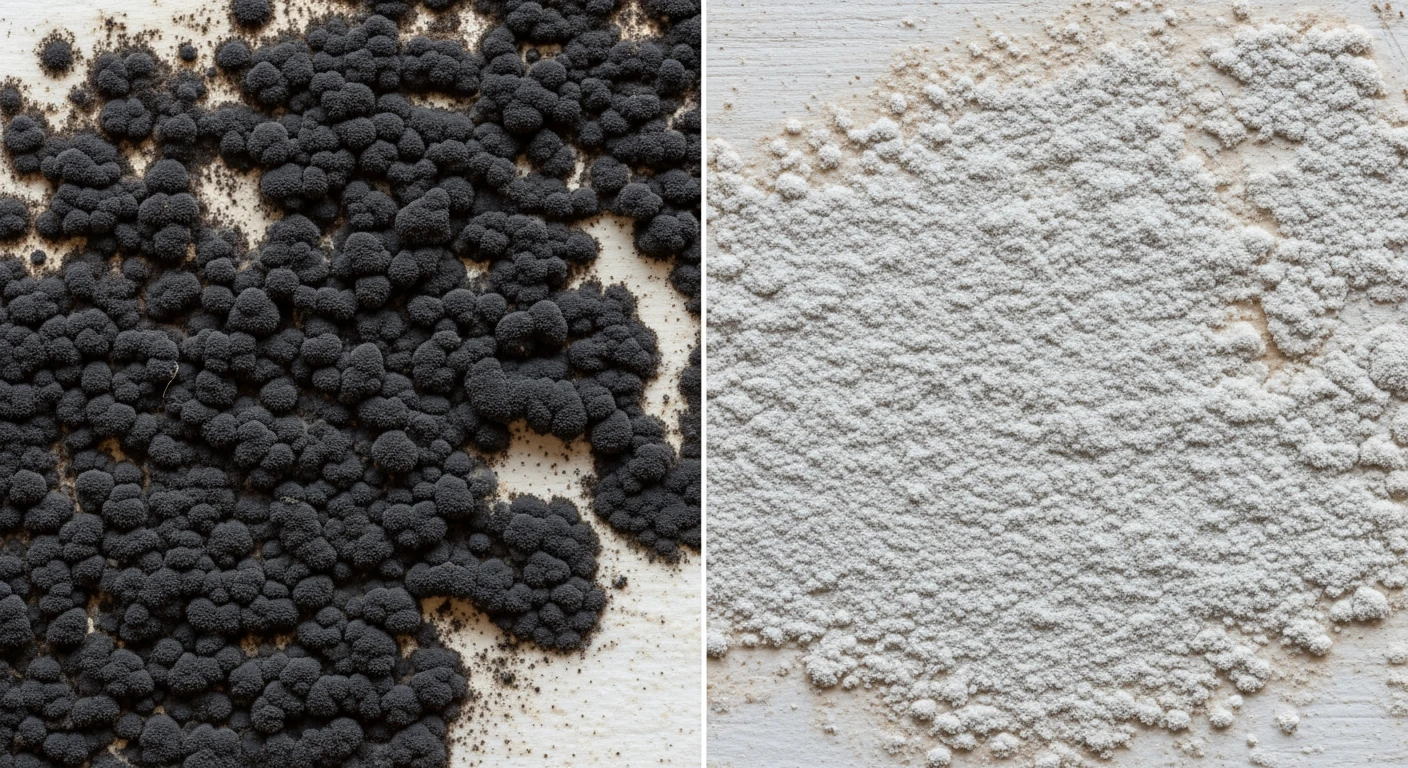
Mold appears as dark (black, green, brown) raised, fuzzy or slimy patches that penetrate into the material. Mold has texture — it looks three-dimensional. It grows in irregular patterns and may appear wet or actively spreading. Mold on drywall, wood, or fabric is growing INTO the material, not just sitting on top.
Mildew appears as flat, powdery, white or gray-white film that sits ON surfaces. Mildew has minimal texture — it looks like a dusting of powder or a thin stain. It typically forms in neat, even patterns on smooth non-porous surfaces like tile, glass, and painted finishes.
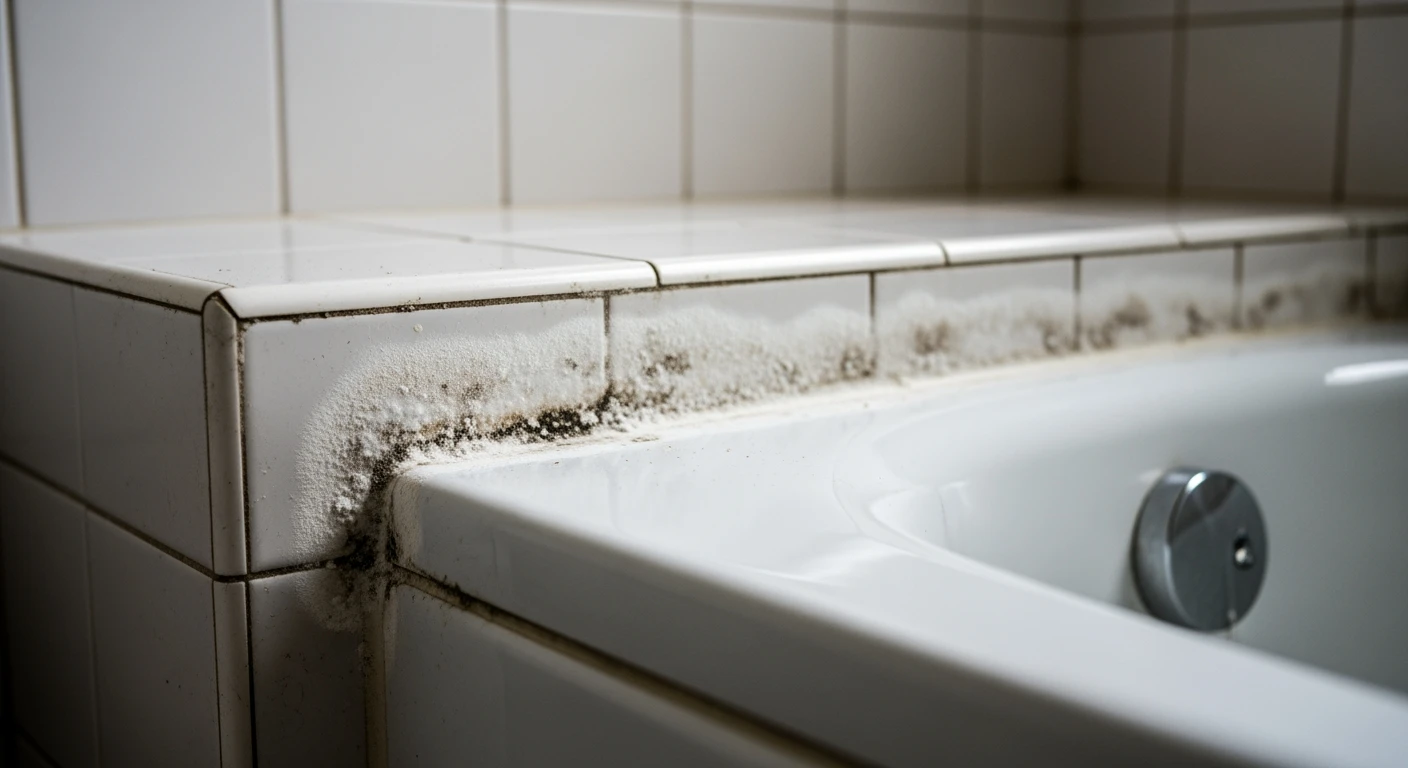
Bathroom mildew is the most common moisture issue Houston homeowners encounter. It appears on tile grout, shower doors, around tub edges, and on bathroom ceilings — wherever moisture from showers and baths lingers. Unlike mold, bathroom mildew can usually be cleaned with household products (diluted bleach, hydrogen peroxide, or commercial mildew cleaners) because it sits on non-porous surfaces.
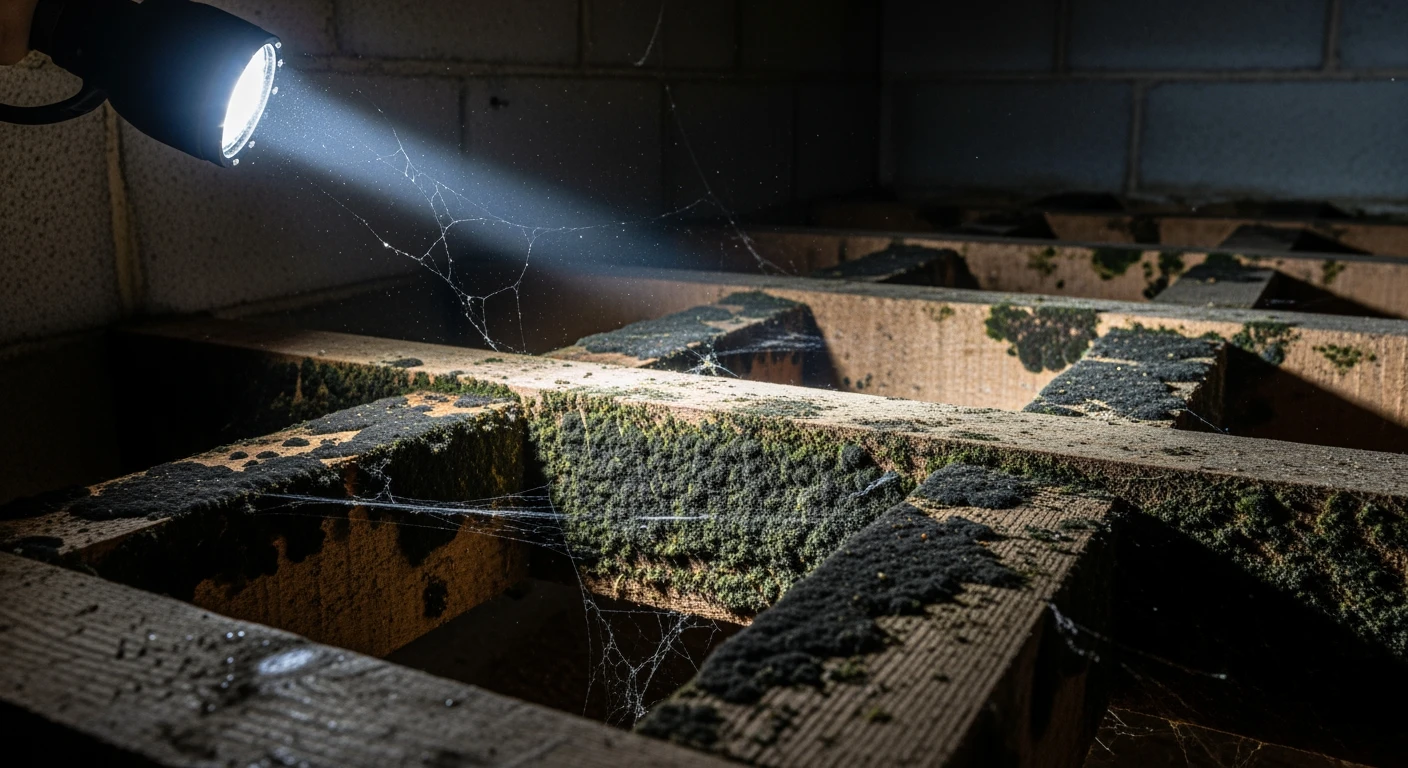
When you find dark growth on wood — floor joists, framing, subflooring, or wooden cabinets — you are almost certainly looking at mold, not mildew. Mold feeds on the organic cellulose in wood and sends root-like structures (hyphae) into the grain. You cannot wipe it off the way you wipe mildew off tile. Wood with mold growth must be treated with antimicrobial solutions and may need to be removed and replaced if the penetration is extensive.
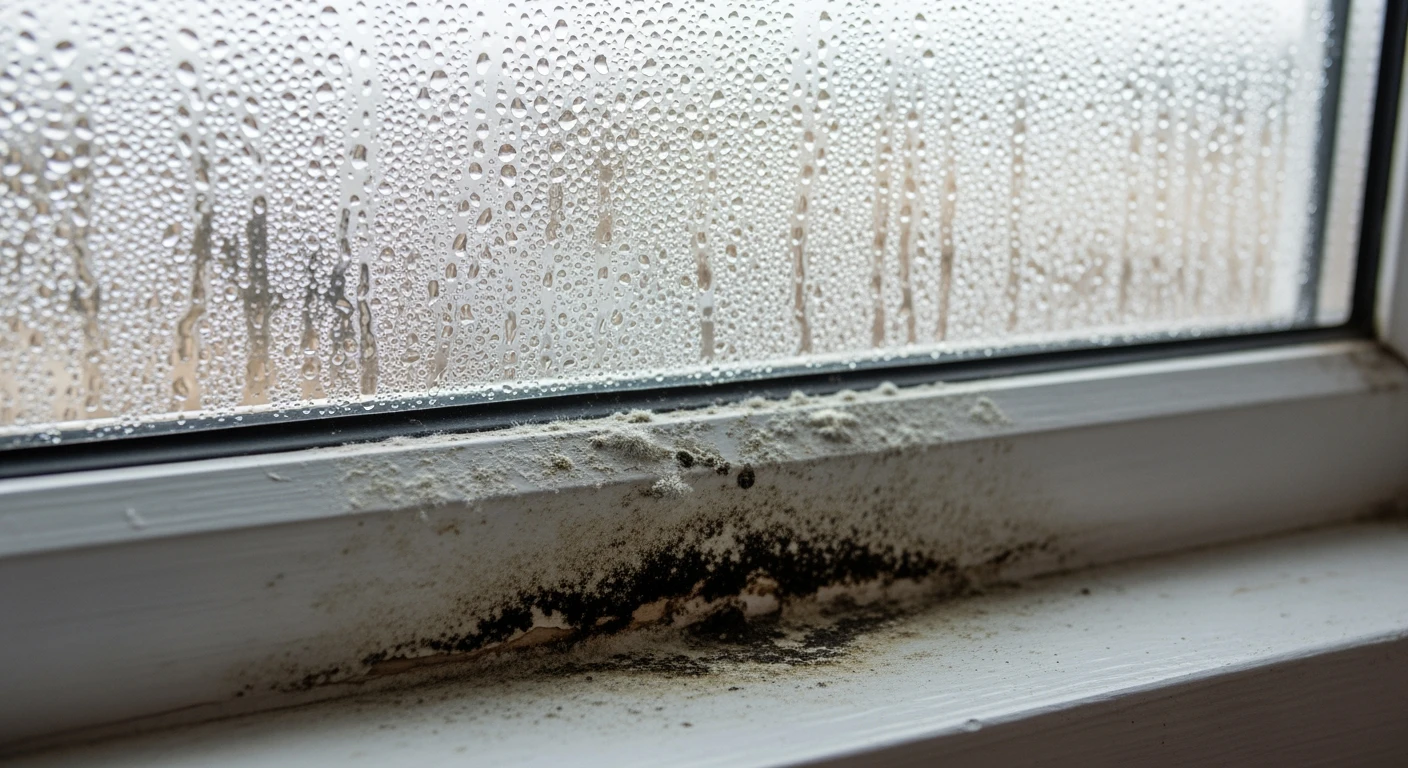
Houston’s AC-dependent climate creates constant condensation around windows where cold interior air meets warm humid exterior air. This condensation feeds mildew growth on window frames, sills, and adjacent wall surfaces. Left unaddressed, persistent window condensation can escalate from surface mildew to actual mold growth in the wall cavity behind the window frame.
You can handle it yourself if: The growth is flat and powdery (mildew), on a non-porous surface (tile, glass, painted surface), covers less than 10 square feet, and you have no underlying water damage or moisture problem feeding it.
Call a professional if: The growth is raised, fuzzy, or slimy (mold), on porous materials (drywall, wood, carpet, insulation), covers more than 10 square feet, is associated with water damage or a known leak, or you smell a persistent musty odor. 247 Restoration Specialists serves the entire Houston metro for professional mold assessment and remediation.
Explore our specialized service: mold on walls inspection and remediation.