

Houston’s attics reach extreme temperatures — 150°F or higher in summer — and the temperature differential between air-conditioned living space below and superheated attic air above creates moisture dynamics that drive mold growth on roof sheathing, insulation, and structural framing. Attic mold is one of the most common and most expensive mold problems in Houston homes, yet most homeowners never look up there until a home inspection or roof replacement reveals the problem.
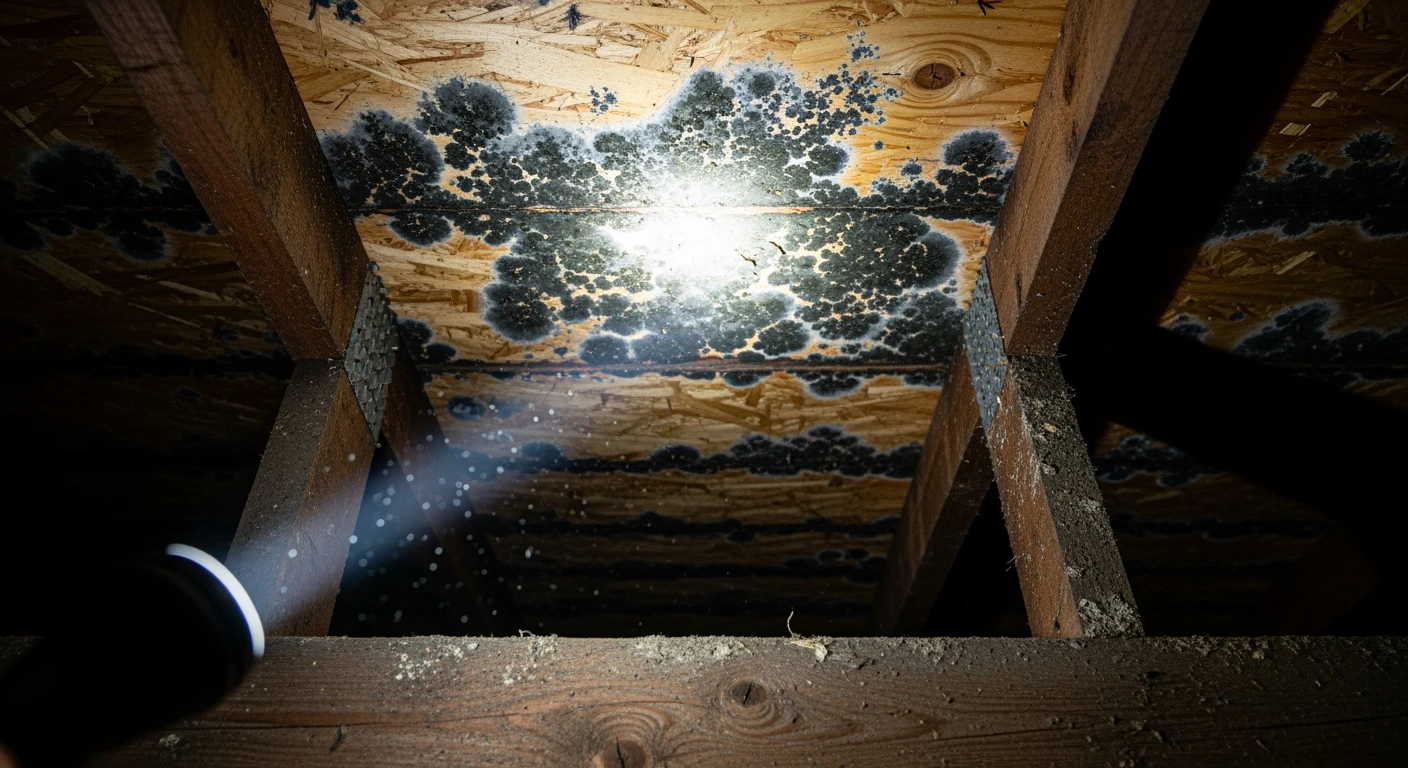
The underside of the plywood or OSB roof sheathing is the most common surface for attic mold growth in Houston. The mold appears as dark discoloration covering large areas of the roof deck — sometimes the entire underside of the roof is affected. It may appear as uniform dark staining or as distinct colonies with fuzzy texture. The growth pattern typically starts at the roof peak (where heat and moisture concentrate) and spreads downward toward the eaves.
Why it happens: When warm, humid air from the living space leaks into the attic through ceiling penetrations (recessed lights, attic hatches, plumbing vents, HVAC equipment), it meets the underside of the hot roof deck. As the roof cools at night, this moisture condenses on the sheathing surface — and in Houston’s sustained humidity, the sheathing never fully dries before the next night’s condensation cycle begins.
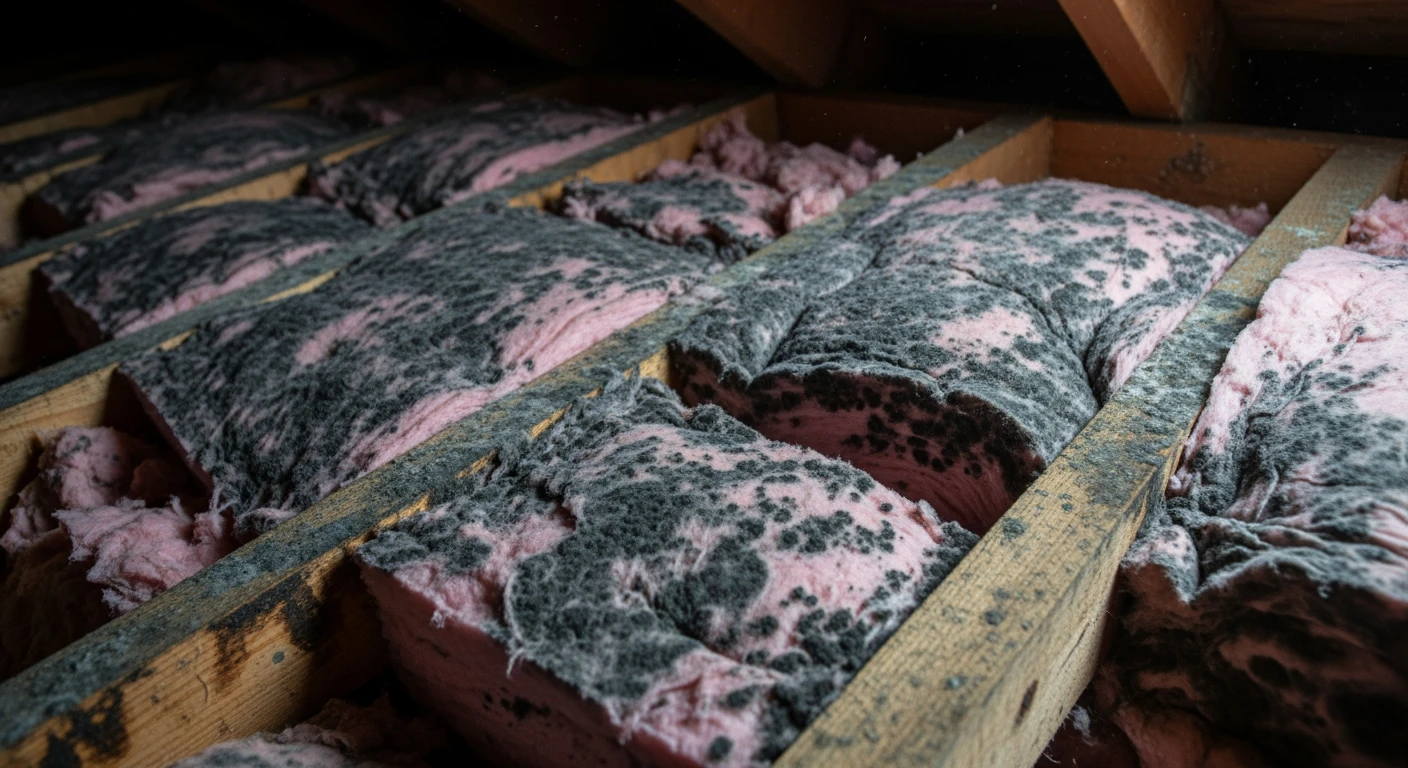
When attic moisture conditions support mold on the roof sheathing, the insulation below is often affected as well. Mold on fiberglass batt insulation appears as dark discoloration or fuzzy growth on the insulation surface. Unlike hard surfaces, insulation cannot be effectively cleaned of mold — contaminated insulation must be removed and replaced as part of the remediation process. This adds significant cost to attic mold projects but is necessary because moldy insulation continues releasing spores into the home through ceiling penetrations.
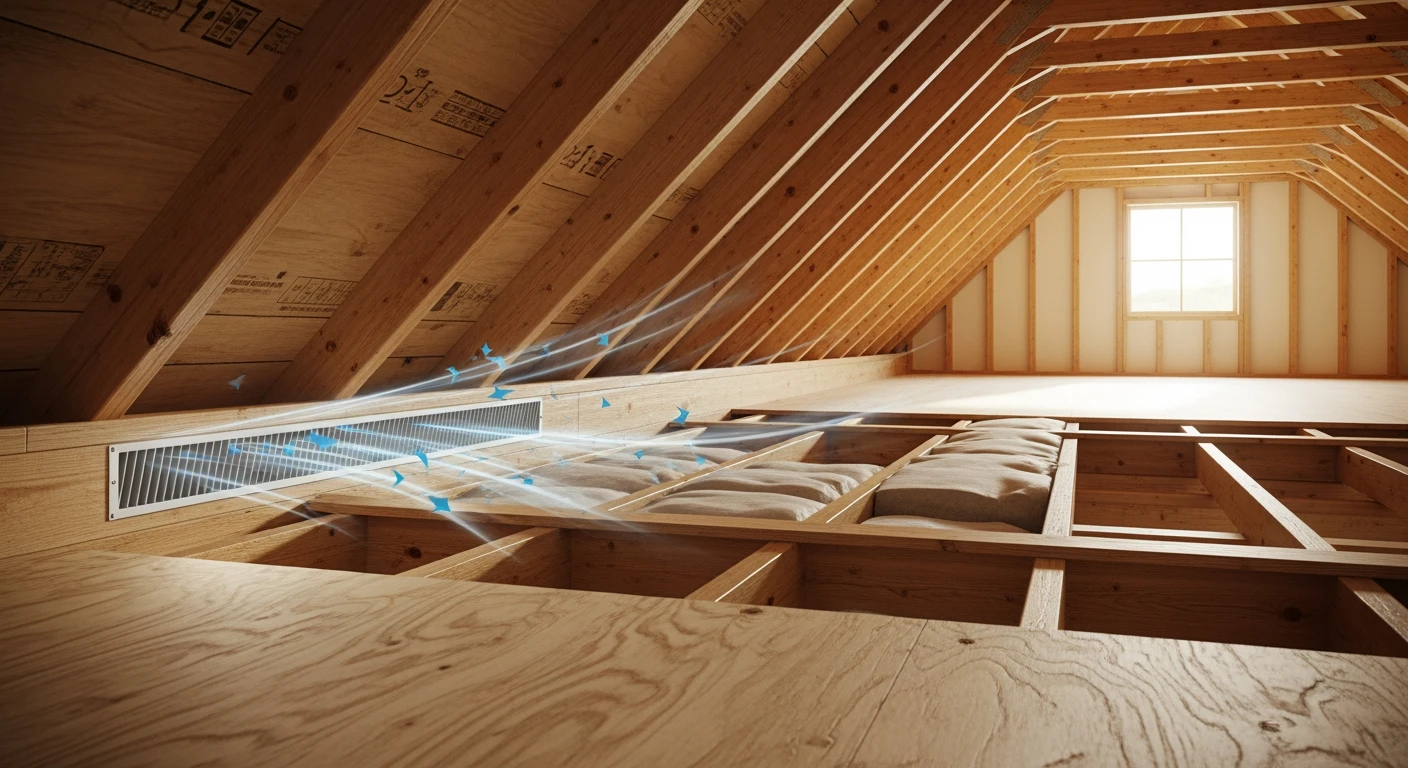
Treating attic mold without fixing ventilation is a temporary fix that guarantees recurrence. The permanent solution requires balanced attic ventilation — intake at the soffits (eaves) and exhaust at the ridge or through roof-mounted vents. The target is 1 square foot of net free ventilation area per 150 square feet of attic floor space (or 1:300 with a vapor barrier). Houston’s extreme heat makes powered attic ventilators or solar-powered vents an effective supplement to passive ventilation.
Additionally, air sealing the ceiling plane — closing gaps around recessed lights, plumbing penetrations, HVAC equipment, and the attic hatch — prevents warm humid interior air from entering the attic in the first place.
247 Restoration Specialists provides attic mold remediation across Houston — from sheathing treatment and insulation replacement to ventilation assessment and correction. We address both the mold and the conditions that caused it.