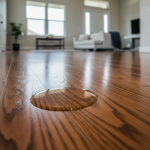
An Injectidry mat is positioned over a section of visibly cupped hardwood flooring, showcasing the non-invasive repair method for water-damaged floors, central to our 'Hardwood Cupping Repair: Injectidry vs. Replacement' guide.

Hardwood Cupping Repair: Injectidry vs. Replacement

Don’t rip out your wet hardwood floors yet. Learn how Injectidry mats and forensic drying can reverse cupping and save thousands in replacement costs.

Severely corroded cast iron pipe showing a 'bottom-out' failure with a collapsed section and pooling water in the soil beneath a removed concrete slab. This illustrates a common and severe type of slab leak requiring expert water restoration in Houston homes, particularly those built before 1985, as highlighted in our article about cast iron pipe failures.

Water Restoration Houston: The Cast Iron ‘Bottom-Out’ Slab Leak

Need water restoration in Houston? If your home was built before 1985, learn why cast iron ‘bottom-out’ failures cause massive sub-slab water damage.

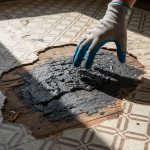
Visible water damage impacting the base of finely crafted Sterling Millwork and adjacent Travertine flooring, demonstrating the specialized challenges of 'moisture clouding' and wood cracking discussed in 'Sterling Millwork & Travertine: Repairing Luxury Finishes After a Flood'.

Sterling Millwork & Travertine: Repairing Luxury Finishes After a Flood

Water damage near Sterling millwork or Travertine floors? Learn why standard drying cracks wood and causes ‘moisture clouding’ in luxury natural stone.

Close-up view of century-old lath and plaster wall during Zychlinski Park historic restoration.

Zychlinski Park Historic Restoration: Saving Century-Old Lath & Plaster

Restoring a historic home in Pearland’s Zychlinski Park? Learn why standard demolition destroys lath and plaster, and how our surgical remediation saves it.

Magnified view of metallic, hair-like zinc whiskers emerging from a surface, representing the microscopic data center contamination that causes server shorts and IT infrastructure damage, often initiated by a water event on raised floor tiles.

Zinc Whiskers: The Data Center Contamination Threat

Unexplained server shorts after a water event? Learn how ‘Zinc Whiskers’ grow on raised floor tiles and how our forensic cleaning protects IT infrastructure.

A specialized technician injects high-density polyurethane foam directly beneath a concrete slab, demonstrating the precise method for lifting slabs. This visual clearly shows how polyurethane injection addresses foundation sinking by filling voids and stabilizing soil, offering an effective alternative to traditional steel piers.

Polyurethane Injection: Lifting Slabs Without Piers

Foundation sinking after a major plumbing leak? Learn why high-density polyurethane injection is superior to mudjacking and expensive steel piers.

Close-up of a hand using a pen to highlight a specific section of an insurance document, illustrating the process of invoking the Appraisal Clause to resolve stalled restoration claims.

The Appraisal Clause: The Nuclear Option for Stalled Claims

Adjuster refusing to pay the full scope of your restoration? Learn how to invoke the ‘Appraisal Clause’ to bypass the carrier and force a binding valuation.

Ground-level view of a commercial office severely flooded, with water covering the floor and partially submerged furniture. This visual demonstrates the extensive damage to commercial build-outs, a key focus of 'Commercial Floods: Who Insures the Build-Out?' regarding tenant and landlord insurance responsibilities.

Commercial Floods: Who Insures the Build-Out?

Tenant or Landlord? Who pays when the office floods? Learn how ‘Betterments and Improvements’ clauses define coverage for commercial build-outs.

A technician inspects dark, murky water mixed with visible hydraulic oil in a flooded elevator pit, illustrating the environmental trap and the need for a compliant extraction protocol to avoid EPA fines.

Elevator Pit Water & Oil: The Environmental Trap

Flooded elevator pit? Pumping it out without checking for hydraulic oil can trigger massive EPA fines. Learn our compliant extraction protocol.

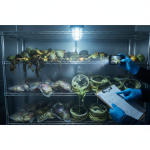
Close-up of a commercial walk-in cooler shelf filled with severely spoiled, discolored produce and wilting greens, representing inventory loss due to commercial food spoliation. This visual aids in understanding the documentation process for insurance claims, as described in 'Commercial Food Spoliation: Documenting Inventory Loss'.

Commercial Food Spoliation: Documenting Inventory Loss

Walk-in cooler failed after a storm? Learn how to rigorously document food spoliation to maximize your commercial insurance inventory claim.