

Houston’s heat and humidity create ideal conditions for Stachybotrys chartarum — the species commonly known as black mold — to colonize homes after water intrusion, plumbing leaks, flooding, and even chronic condensation from air conditioning systems. Recognizing black mold by sight is the first step toward protecting your family and your property.
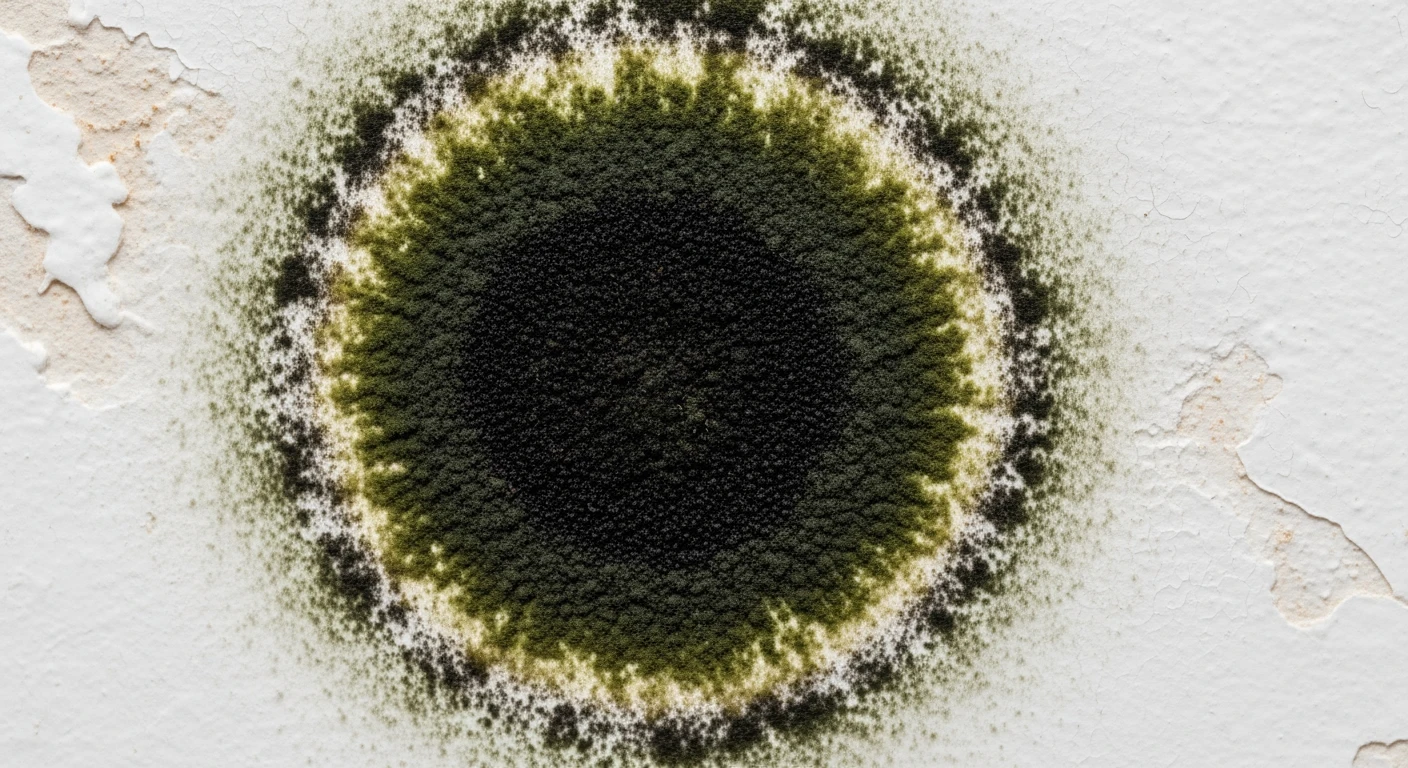
Drywall is the most common surface for black mold growth in Houston homes because the paper facing provides cellulose that mold feeds on. Black mold on drywall appears as dark black or greenish-black circular patches that spread outward from a moisture source. The texture ranges from slimy when actively wet to powdery or fuzzy when drying. Individual colonies start small — sometimes mistaken for dirt or soot — but can spread to cover entire wall sections within weeks if the moisture source is not addressed.
Common drywall mold locations in Houston: behind furniture against exterior walls (condensation), around window frames (seal failures), at the base of walls after flooding (wicking), and around plumbing penetrations (slow leaks).
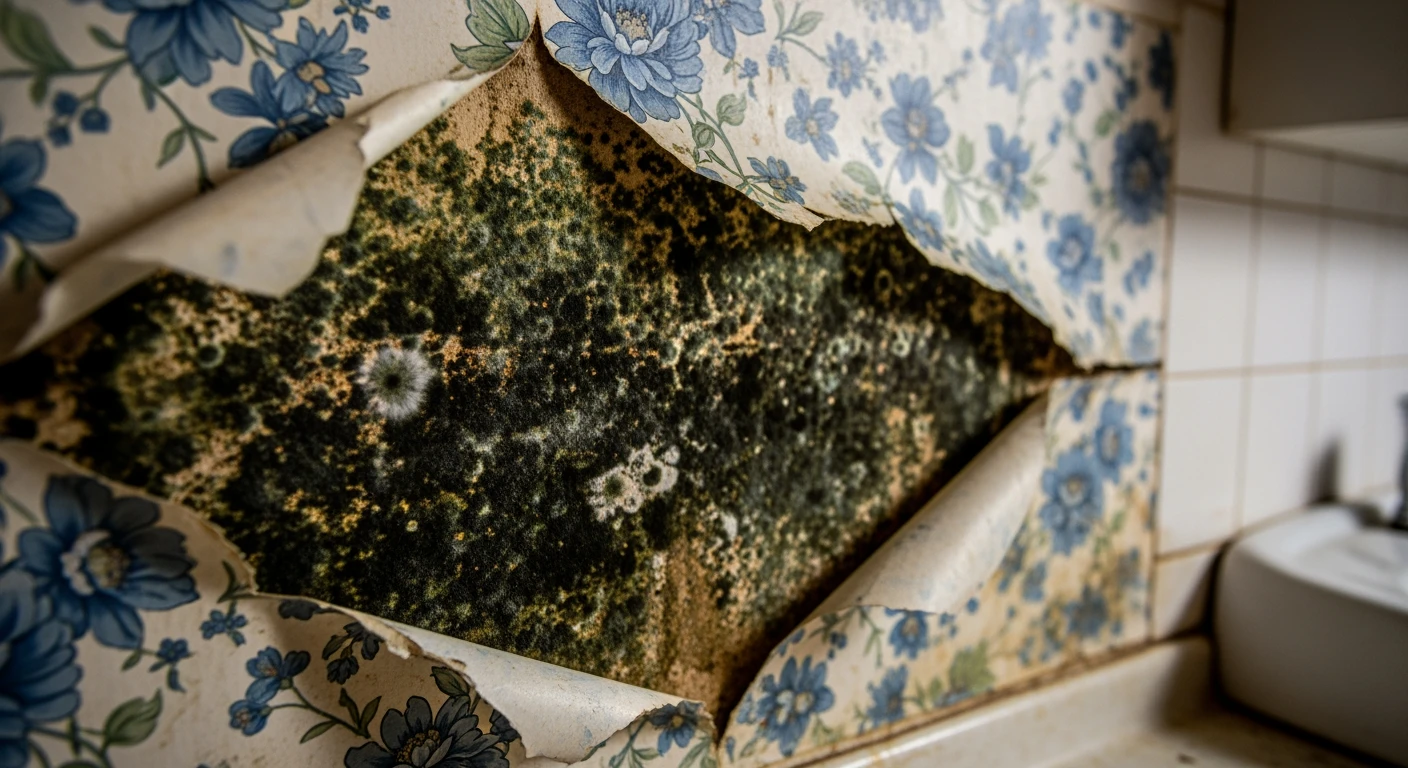
Some of the worst black mold infestations in Houston homes are invisible until a wall is opened. Wallpaper, wood paneling, and vinyl wall coverings trap moisture between the covering and the drywall, creating a sealed humid environment where mold thrives unseen. Homeowners may notice a musty smell with no visible source — this is often the first sign of hidden mold growth behind wall coverings.
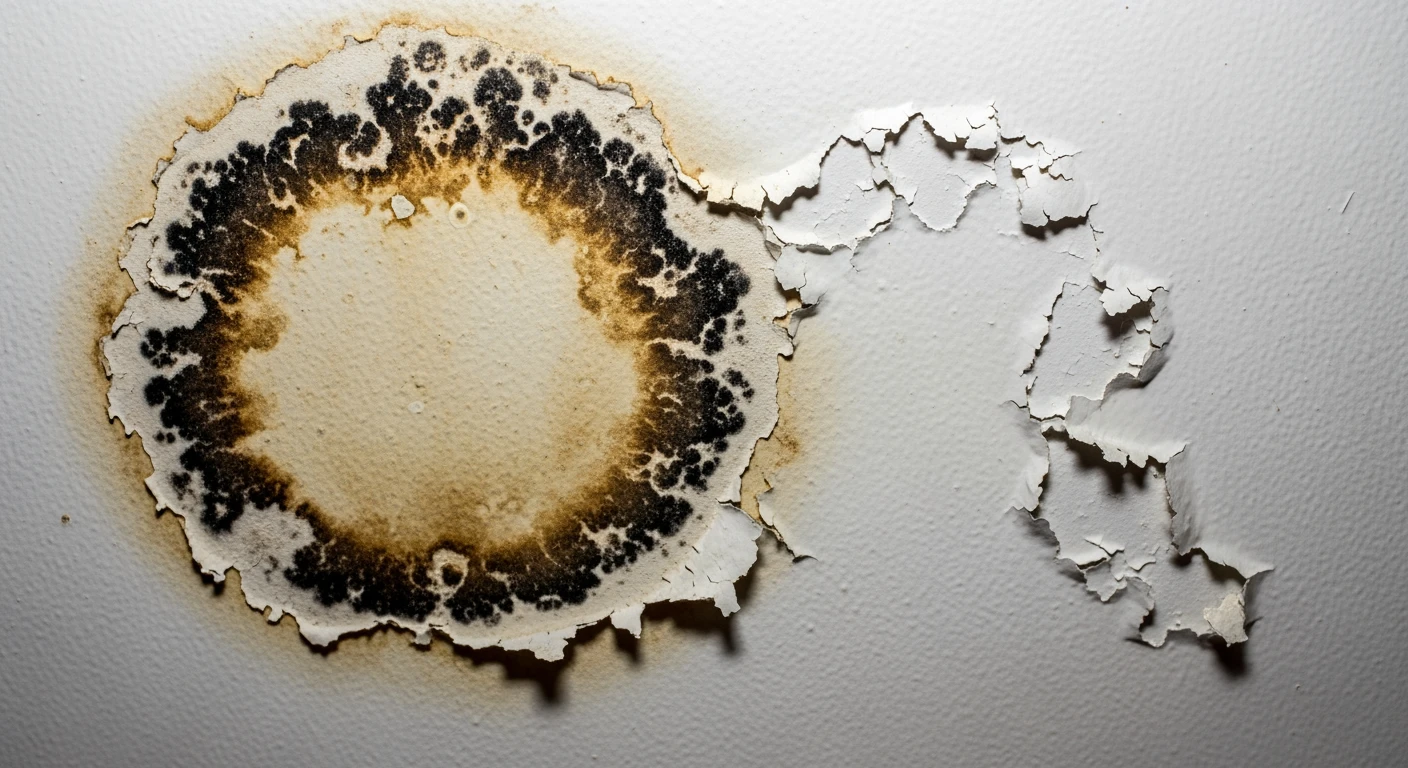
Ceiling mold almost always indicates water from above — a roof leak, an upstairs plumbing failure, or condensation from HVAC equipment in the attic. The water stain comes first (brown rings or discoloration), followed by mold colonization within 24 to 48 hours in Houston’s warm, humid conditions. If you see a ceiling stain developing dark spots around its edges, mold is already growing.
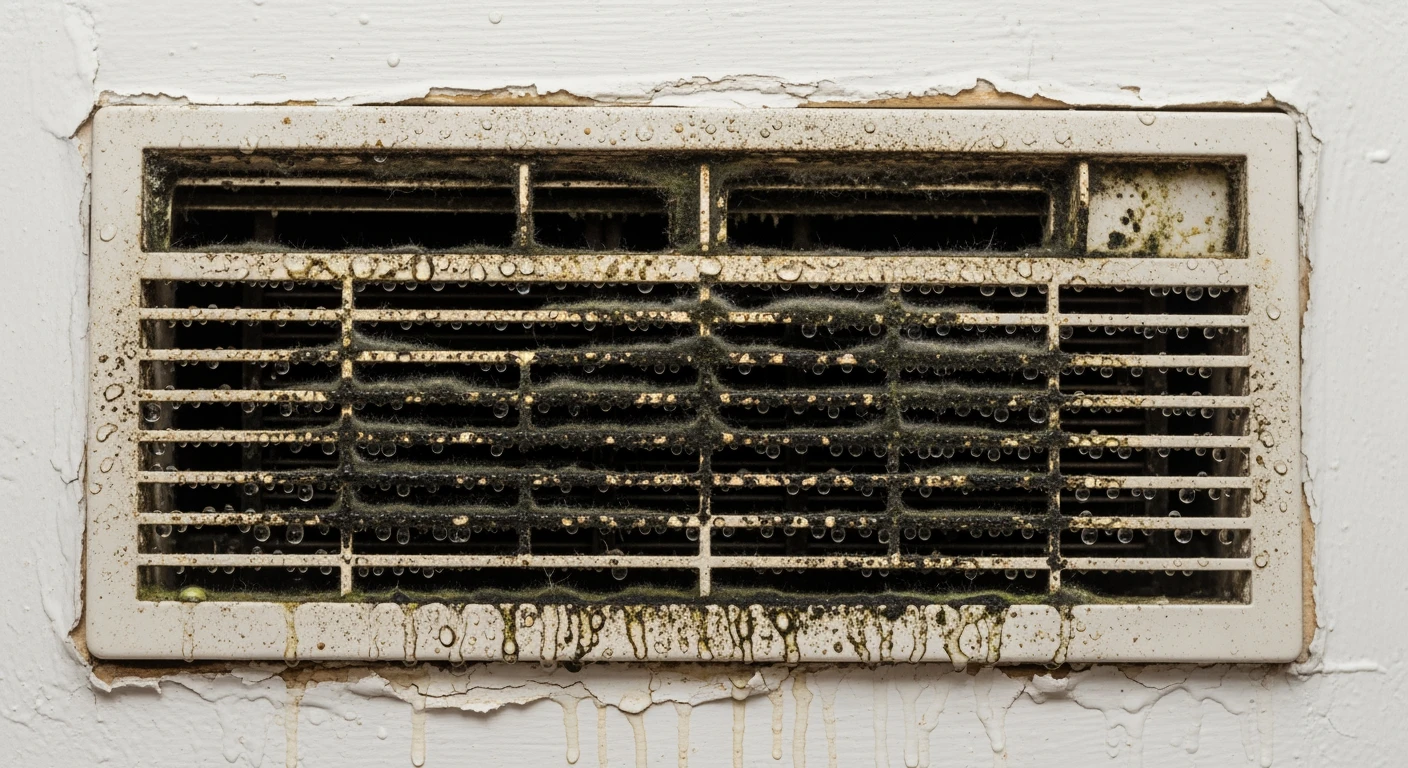
Houston’s reliance on air conditioning creates a unique mold vector. AC systems produce condensation — cold supply air meets warm humid return air, and moisture collects on coils, drip pans, ducts, and vent registers. When this moisture is not properly drained, mold colonizes the HVAC system and distributes spores throughout the home every time the system runs. Signs include dark discoloration around vent registers, a musty smell when the AC kicks on, and unexplained respiratory symptoms that improve when away from home.
The Texas Department of State Health Services recommends professional mold assessment for any mold growth exceeding 25 square feet, any mold associated with a major water damage event, any mold in HVAC systems, and any situation where occupants are experiencing health symptoms. 247 Restoration Specialists provides licensed mold remediation across the Houston metro area — from Katy and Cypress to Sugar Land, Bellaire, Pearland, and Humble. Our teams perform containment, HEPA filtration, antimicrobial treatment, and clearance testing to eliminate mold at the source.
Explore our specialized service: professional black mold removal in Houston.
Explore our specialized service: mold on walls inspection and remediation.