

Water damage in Houston homes comes from hurricanes, tropical storms, plumbing failures, roof leaks, and the constant battle between air conditioning and Gulf Coast humidity. The damage is not always obvious — sometimes the first sign is a subtle stain, a slight warp, or paint that bubbles months after the initial water event. Knowing what water damage looks like in its early stages gives you time to act before secondary damage (mold, structural deterioration) escalates the loss.
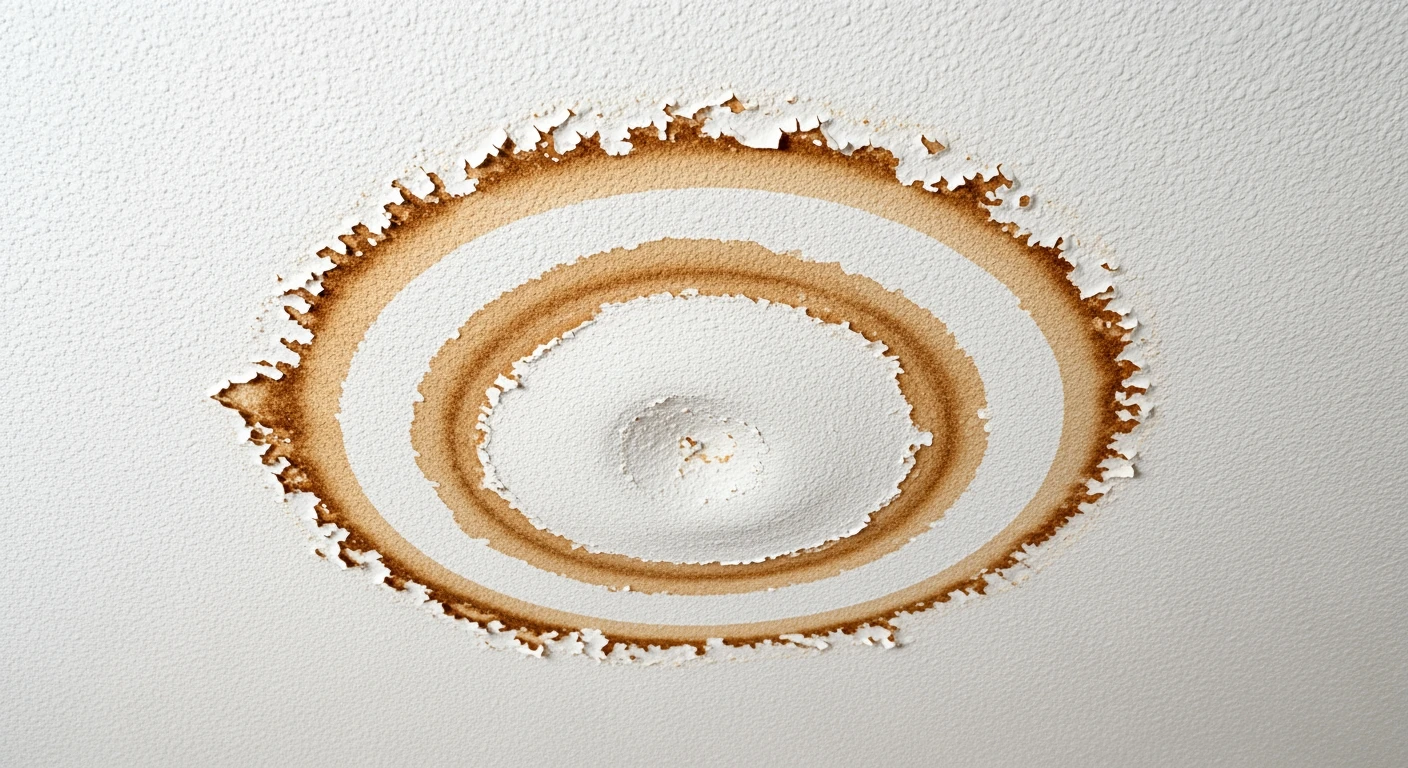
Ceiling stains are the most recognizable sign of water damage. They appear as brown or yellowish rings where water has migrated through the ceiling material and dried. The ring pattern forms because dissolved minerals concentrate at the leading edge of the water as it evaporates. Multiple concentric rings indicate repeated wetting events. Sagging drywall — where the ceiling surface droops or feels soft to the touch — indicates active water accumulation above. Paint bubbling signals moisture trapped between the paint film and the drywall surface.
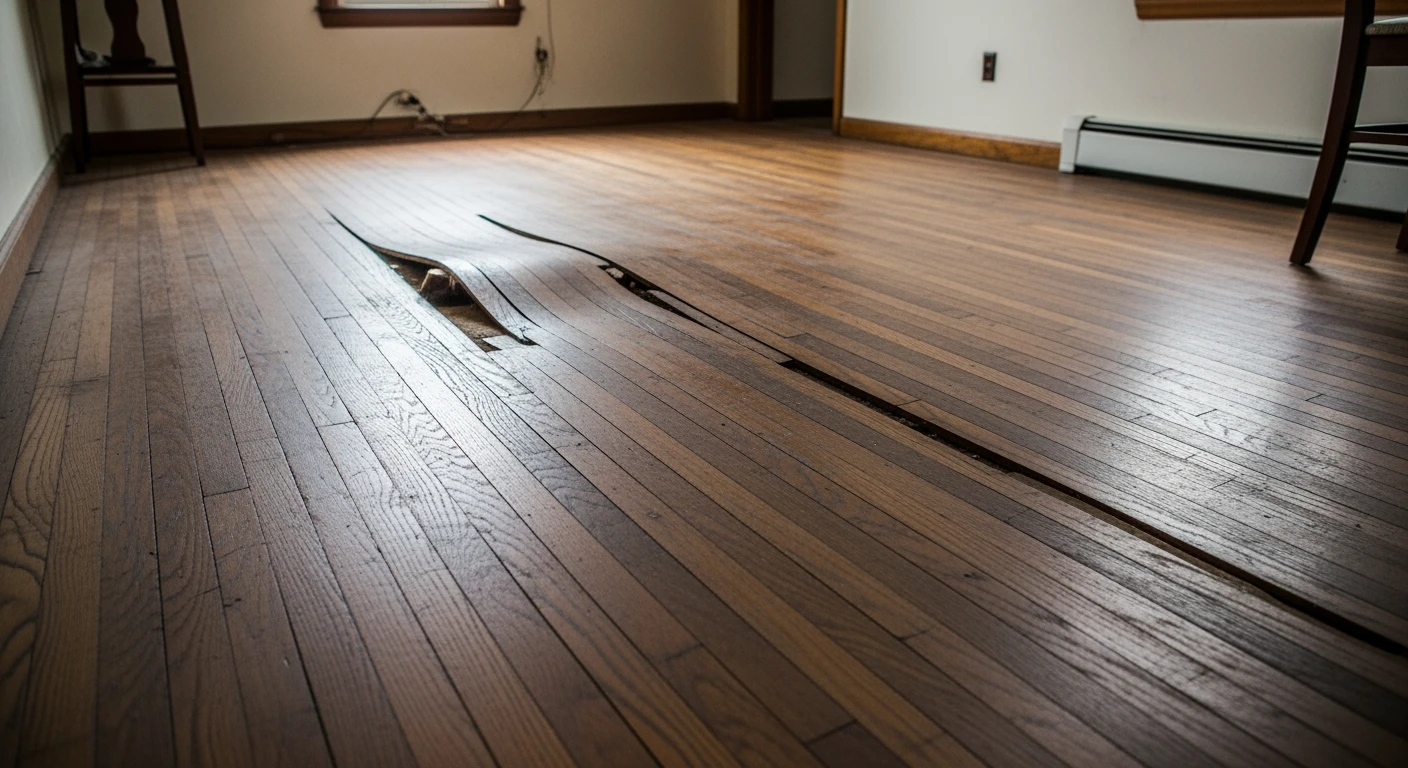
Hardwood, engineered wood, and laminate flooring are highly sensitive to moisture. Cupping occurs when the edges of individual boards rise higher than the center — indicating moisture from below. Crowning is the opposite — the center rises above the edges — indicating moisture from above. Buckling is the most severe form — boards lift entirely off the subfloor, creating visible ridges or tent-like deformations. In Houston, slab leaks (plumbing failures beneath the concrete foundation) are a common cause of floor damage that appears without any visible water source.
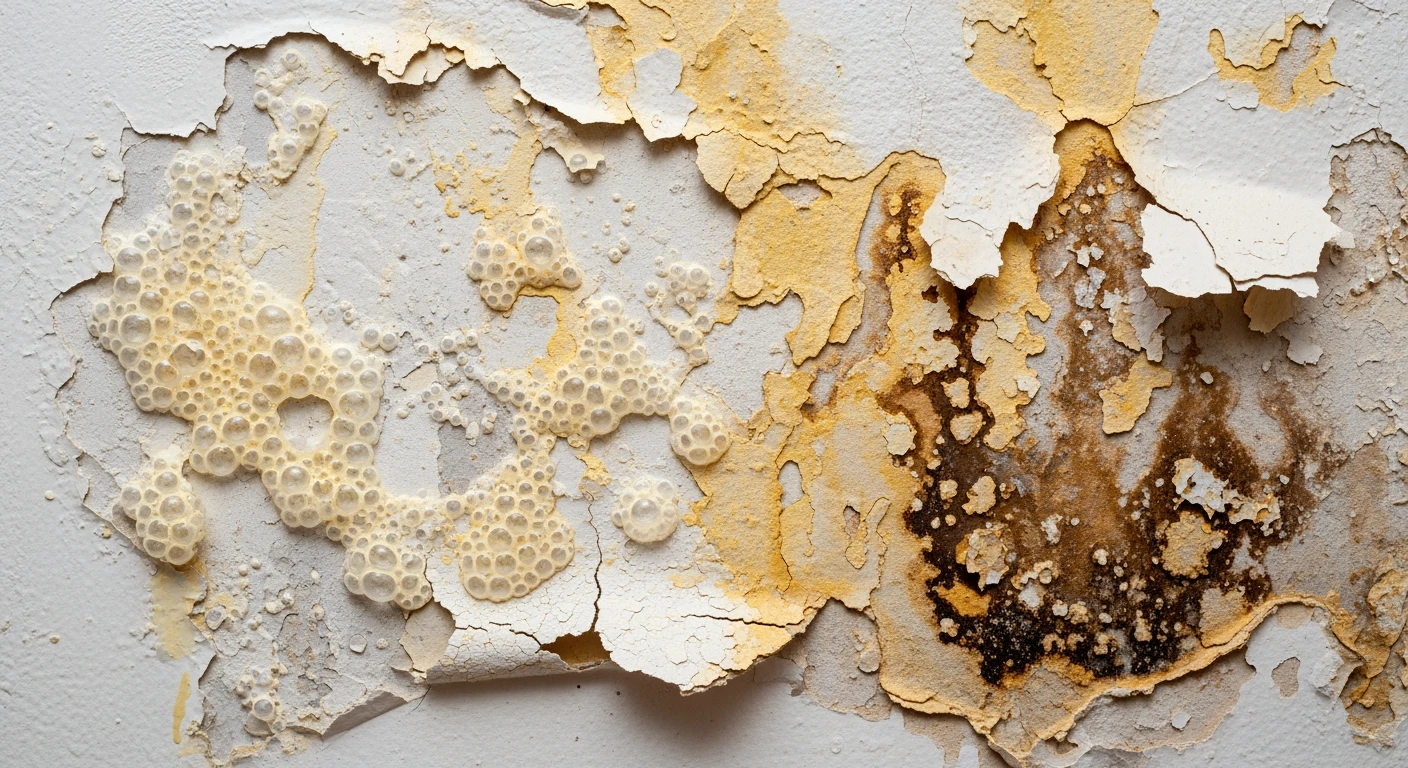
Wall water damage progresses through recognizable stages. Stage 1: Discoloration. Subtle yellowing or darkening of the painted surface, often near the floor or ceiling where water enters. Stage 2: Bubbling. Paint lifts away from the drywall in bubbles as moisture accumulates between the paint film and the wall surface. Stage 3: Peeling. Bubbles break open and paint peels in sheets, exposing damp or stained drywall. Stage 4: Crumbling. The drywall itself softens and crumbles — indicating saturation that has compromised the gypsum core.
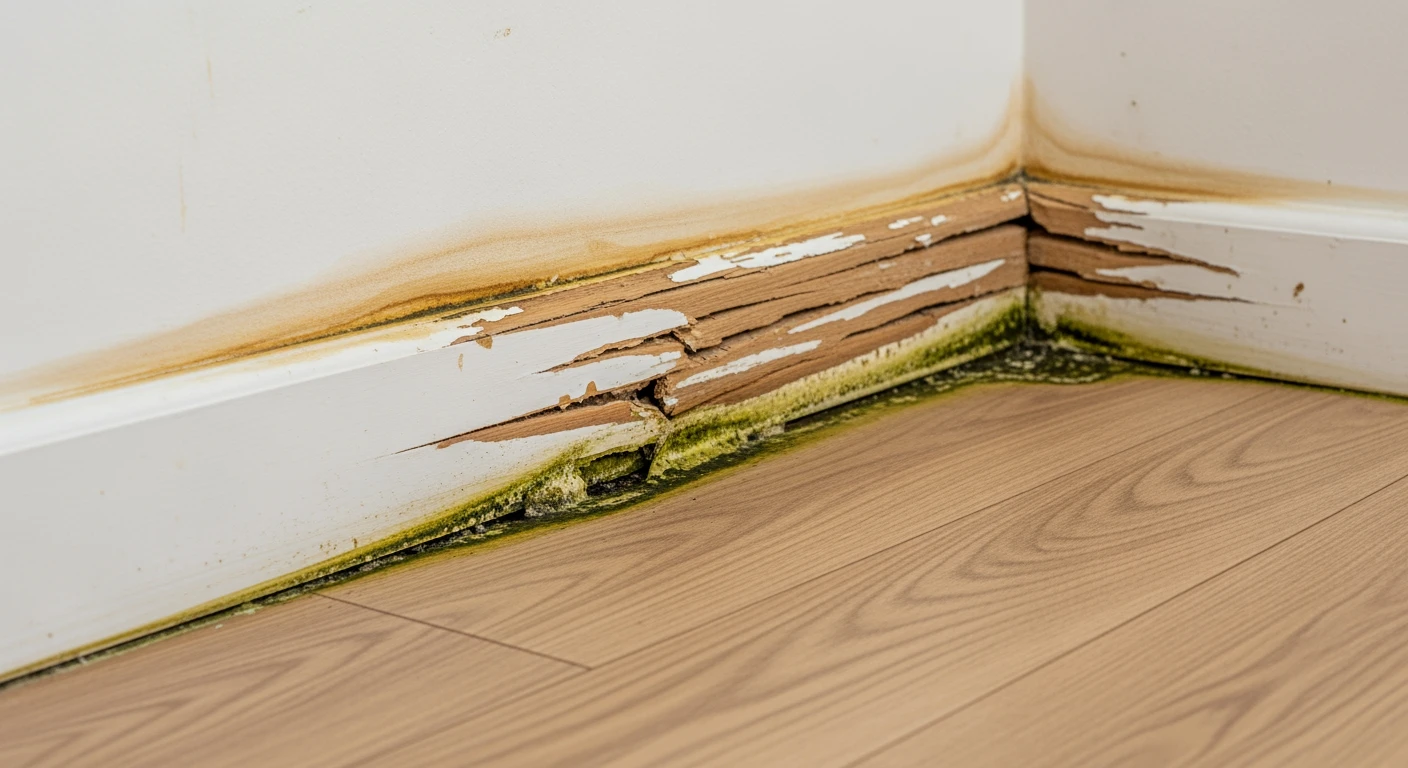
Baseboards are the frontline of floor-level water damage. After flooding, plumbing leaks, or slab moisture, the baseboard-wall junction is where damage concentrates. Signs include warped or separated baseboards, paint discoloration at the base of walls, soft or crumbly drywall behind the baseboard, and the first appearance of mold growth (which starts at the baseboard and migrates upward). In Houston, post-flood damage assessment always begins at baseboard level because this is where the damage progression is most visible.
Stop the source. If you can identify the water source (leaking pipe, running appliance, active roof leak), shut it off or contain it immediately. Document everything. Photograph the damage from multiple angles before any cleanup begins — this documentation is critical for insurance claims. Call for professional assessment within 24 hours. Water damage escalates rapidly in Houston’s humidity — mold begins colonizing damp materials within 24 to 48 hours. 247 Restoration Specialists responds 24/7 across the Houston metro for emergency water damage assessment and mitigation.
Explore our specialized service: ceiling water damage repair in Houston.